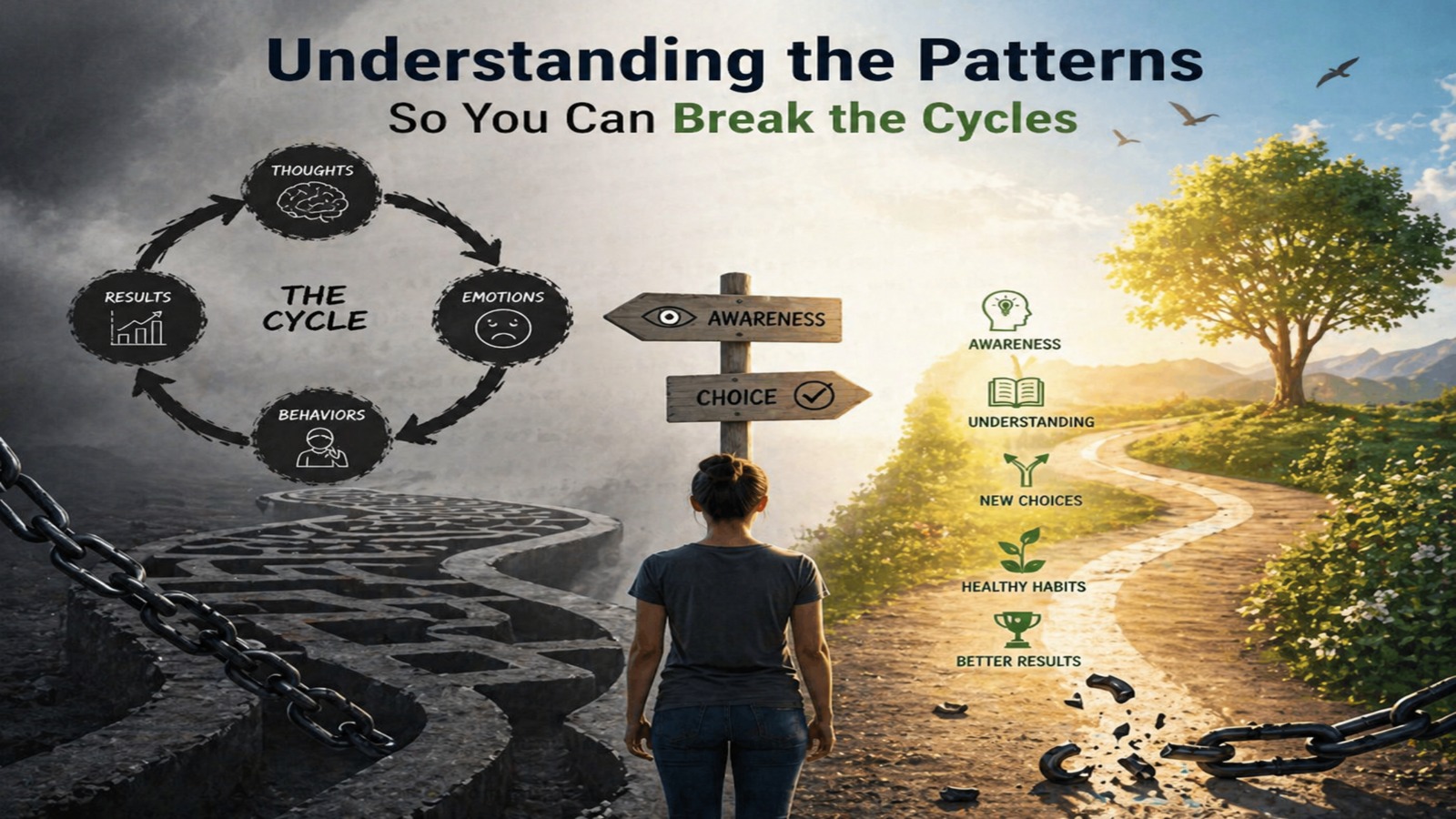
Understanding Your Patterns Is How You Break the Cycles
One of the most disorienting experiences in the aftermath of relational pain is looking back and noticing patterns — the same kinds of relationships, the same emotional responses, the same fears arising in different circumstances. For many women, this recognition comes with a heavy dose of self-judgment: Why do I keep ending up here?
The answer is rarely about personal failure. It is almost always about unexamined history. And understanding that distinction is where lasting change begins.
Where Patterns Come From
Long before a woman can think critically about her experiences, her mind is absorbing information about what love looks like, what safety feels like, and what she must do to survive in relationships. These early impressions form a template — a blueprint carried, largely unconsciously, into every relationship and season that follows.
The nervous system plays a central role in this process. It is wired to find comfort in what is familiar, even when what is familiar is painful. This is why a woman who grew up in emotional chaos may find herself drawn to relationships that recreate that same dynamic — not because she wants pain, but because familiarity registers as safety in the body, regardless of whether the environment is actually safe.
How Unhealed Wounds Create Blind Spots
When pain goes unaddressed, it does not simply sit quietly in the past. It actively shapes perception. A woman with unhealed wounds may respond to present-day situations as though she is still in the environment that originally hurt her — not out of irrationality, but out of a nervous system doing exactly what it was trained to do.
These responses can look like overreacting, becoming emotionally unavailable, self-sabotaging relationships that are actually healthy, or consistently choosing partners and dynamics that confirm painful beliefs about the self. None of these are character flaws. They are the predictable outworking of patterns that were never traced to their source.
The Difference Between Understanding and Excusing
A critical distinction is worth naming here: understanding why patterns exist is not the same as excusing them. Awareness is not an invitation to remain stuck. It is the necessary first step to genuinely moving forward.
A woman cannot break a cycle she cannot see. But when she begins to understand — with compassion and without condemnation — how her past shaped her present, she gains something that trying harder never provided: real choice. The grounded, clear-eyed ability to see what has been driving her decisions and consciously decide she wants something different.
Awareness as the Beginning of Freedom
The work of tracing patterns is not about assigning blame — to parents, partners, or the self. It is about developing the kind of self-knowledge that makes change genuinely possible rather than endlessly effortful.
Questions worth sitting with include: What relational dynamics feel familiar, even when they are not healthy? What beliefs about love, safety, or personal worth might be quietly shaping choices? Where did those beliefs come from — and are they still true?
The women who break generational and relational cycles are not necessarily the ones who tried the hardest. They are the ones who were willing to look honestly at where the cycles began. Awareness, however uncomfortable at first, is the most direct path to the freedom that self-knowledge makes possible.